About
Our Founder
The life and work of the late Venerable M M Mahaweera Maha Nayaka Thero, who founded Mangala Vihara and led its first Sunday Dhamma classes.
Our story
The history of Mangala Vihara is a story of devotion, community, and enduring dedication to the Dhamma. From its humble beginnings, it has grown into one of Singapore's foremost Theravāda Buddhist institutions.
The temple's origins are rooted in the profound generosity of a devotee and the visionary leadership of a monk.
Mangala Vihara Buddhist Temple is established by the late Venerable M. M. Mahaweera on land generously donated by Madam Chew Quee Neo. The groundbreaking ceremony at No. 38 Jalan Eunos, later renumbered to No. 30, symbolically reflected the 38 blessings extolled in the Mahāmangala Sutta.
The temple's spiritual heart is established with the installation of the principal Buddha image in the Shrine Hall. The commitment to education begins immediately with the launch of the Sunday Dhamma School, adopting a structured syllabus from the Young Men's Buddhist Association (YMBA) of Colombo, Sri Lanka.
A sacred Bodhi tree, a sapling from the historic city of Anuradhapura, Sri Lanka, is planted, creating a living link to the site of the Buddha's enlightenment. The first murals are painted in the Shrine Hall, and Pāli chanting classes are launched, preserving the ancient language of the Buddhist texts.
The spiritual infrastructure is strengthened with the construction of a Chapter House (Sīmā), a sanctified boundary essential for formal monastic observances and ceremonies.
[PLACEHOLDER, temple to supply: early photographs of Mangala Vihara, for example the original shrine hall, the founder teaching, and the first Sunday Dhamma School classes.]
To accommodate a growing Sunday Dhamma School, a three-storey extension building is added. The original Chapter House is removed and rebuilt on the third floor of the new building.
A Reclining Buddha image, replicating the famous statue in Polonnaruwa, Sri Lanka, is crafted, symbolising the Buddha's passing into Parinibbāna.
Demonstrating a deep commitment to higher learning, the Buddhist and Pali College of Singapore is established to provide formal religious education.
A major milestone is reached with the completion of a new, grand three-storey Shrine Hall building, adorned with murals by master artist Jayasiri Semage. A Buddha image is also installed at the base of the Bodhi tree.
The temple's entrance is graced by the erection of a Sanchi Gate, modelled on the ancient Indian toraṇas, symbolising the gateway to the Dhamma.
The new Shrine Hall is officially opened by Dr. Wee Kim Wee, former President of the Republic of Singapore.
The temple's beloved founder, Venerable M. M. Mahaweera, passes away, leaving behind a profound legacy.
Recognising the linguistic diversity of its community, the temple launches Theravāda Buddhist Studies in Chinese, greatly expanding access to the Dhamma.
The Myanmar Dhamma Studies programme is launched to meet the specific needs of the Myanmar community residing in Singapore.
The Dhamma Kaki programme is launched to address the spiritual and social needs of senior members, fostering community and well-being. The Sutta & Abhidhamma Studies programme is launched, providing a structured, non-exam based course for students to explore Dhamma and Abhidhamma in depth.
Looking toward the future, the Mangala Vihara Young Adults group is established to engage the next generation, ensuring the Dhamma remains relevant and accessible for years to come.
Honouring the vision of the late Bhante Mahaweera and the devotion of generations, Mangala Vihara Buddhist Temple has flourished as a vibrant spiritual and educational hub for over six decades. May it continue to illuminate the path of wisdom, compassion, and spiritual growth for all.
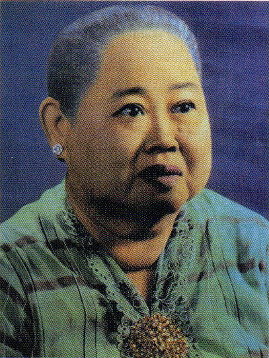
Madam Chew Quee Neo was a Peranakan and the daughter of a rich merchant, Chew Joo Chiat, in the 19th century, after whom Joo Chiat Road was named. She had vowed to build a Buddhist temple if her family was saved from the ravages of the Second World War.
By 1958, Ven. Mahaweera was looking for a temple for the congregation. Wee Tin Guan, also a Peranakan and a close disciple of Ven. Mahaweera who knew Madam Chew Quee Neo, introduced her to the Venerable.
Madam Chew had earlier seen Ven. Mahaweera perform the funeral service for her late husband, Lee Tian Seck, and was impressed by the Theravāda Buddhist service, which was simple, uncomplicated but meaningful.
Ven. Mahaweera accepted her generous donation of the land. Together with Mr Fong Peck Yew, President of the Singapore Buddhist Pāli Society, he set about putting up Mangala Vihara on it, after receiving a cash donation from Madam Chew’s family.
A memorial service is held for her each year. Ask at the office for the date.
The life and work of the late Venerable M M Mahaweera Maha Nayaka Thero, who founded Mangala Vihara and led its first Sunday Dhamma classes.
The Semage murals, the relics, the Maha Bodhi tree, the Buddha's footprint and the replica Sanchi Gate, the sacred objects that fill the temple grounds.
For heritage or archive enquiries, our office is glad to help. Call us, or visit on a Sunday when the office is open (10am–1pm).