Event report
Sīla Samādāna, from A to Z
A retreat on the eight precepts — what the practice asks of us, set out from A to Z.
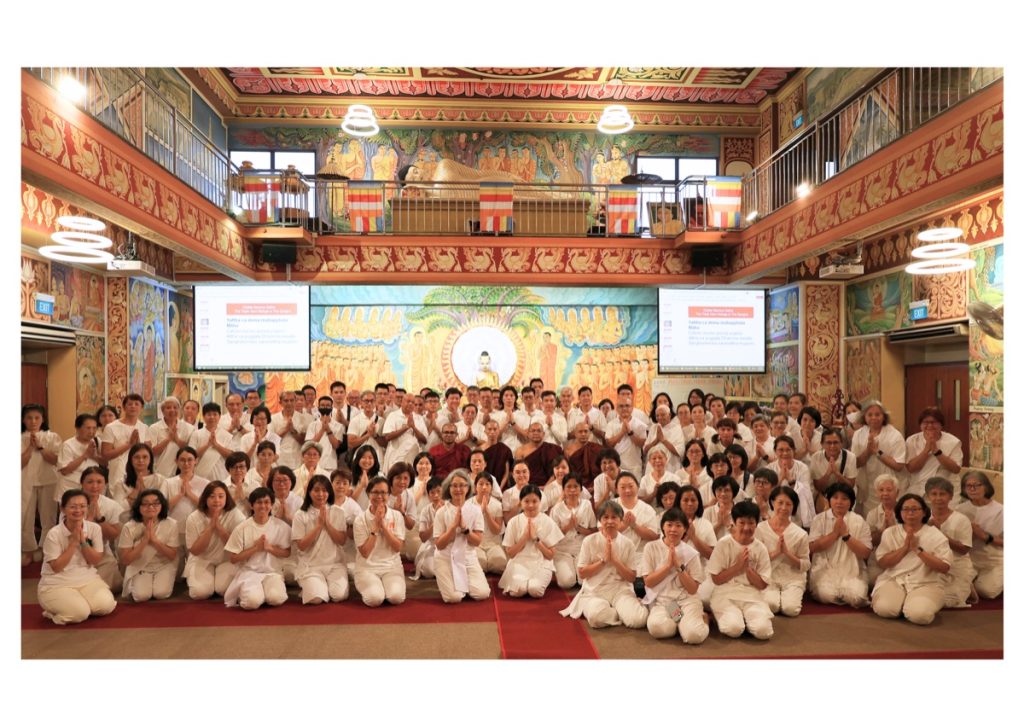
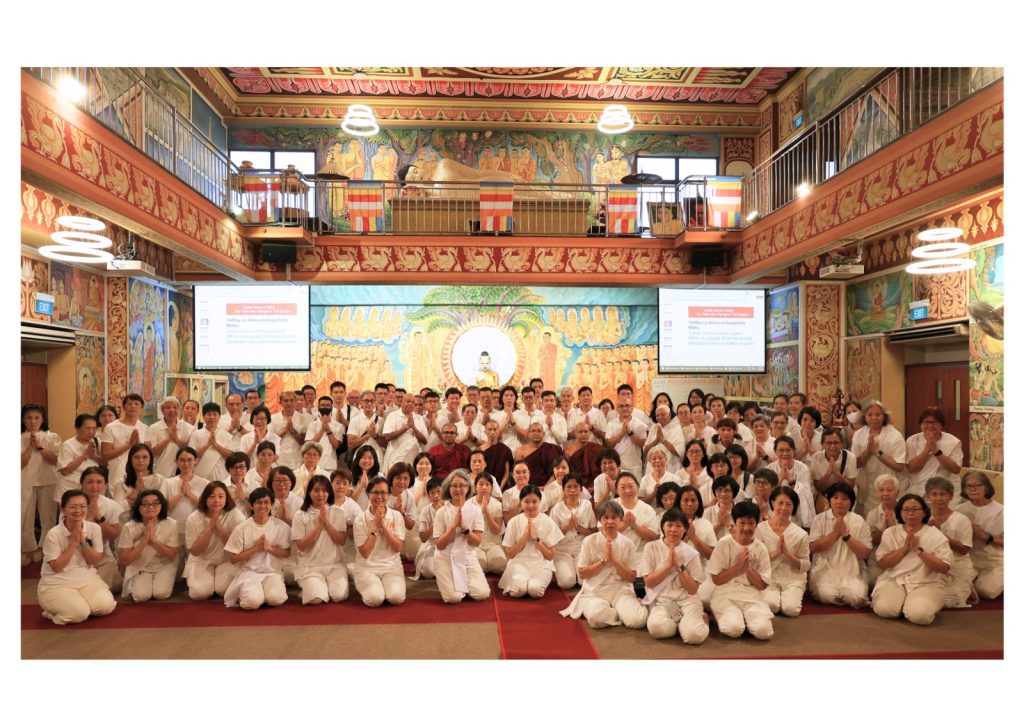
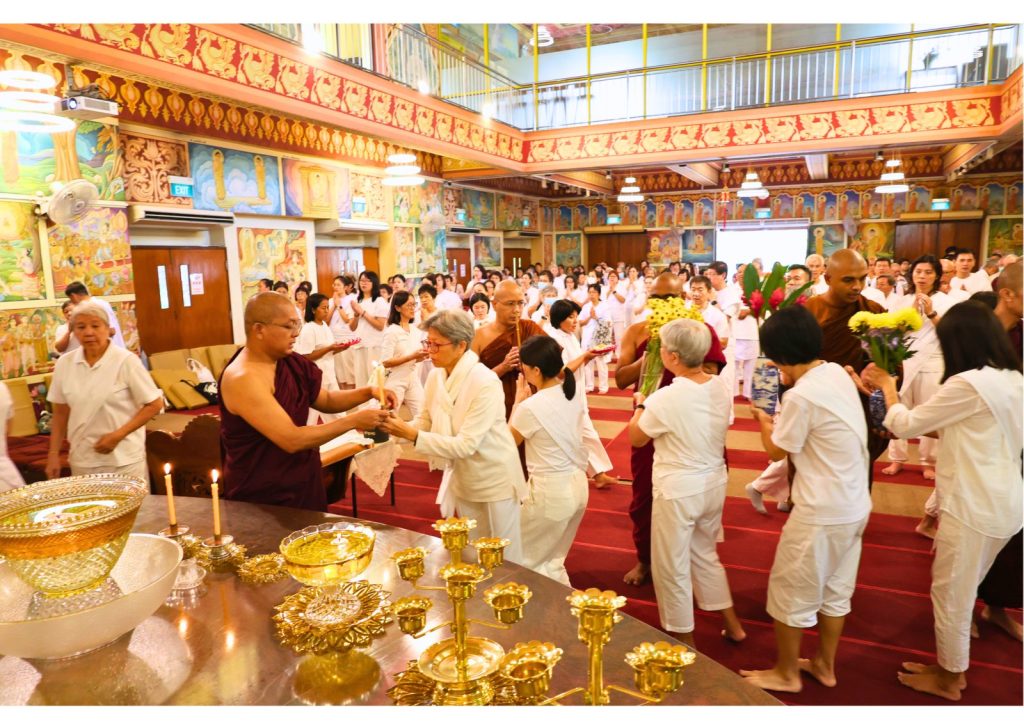
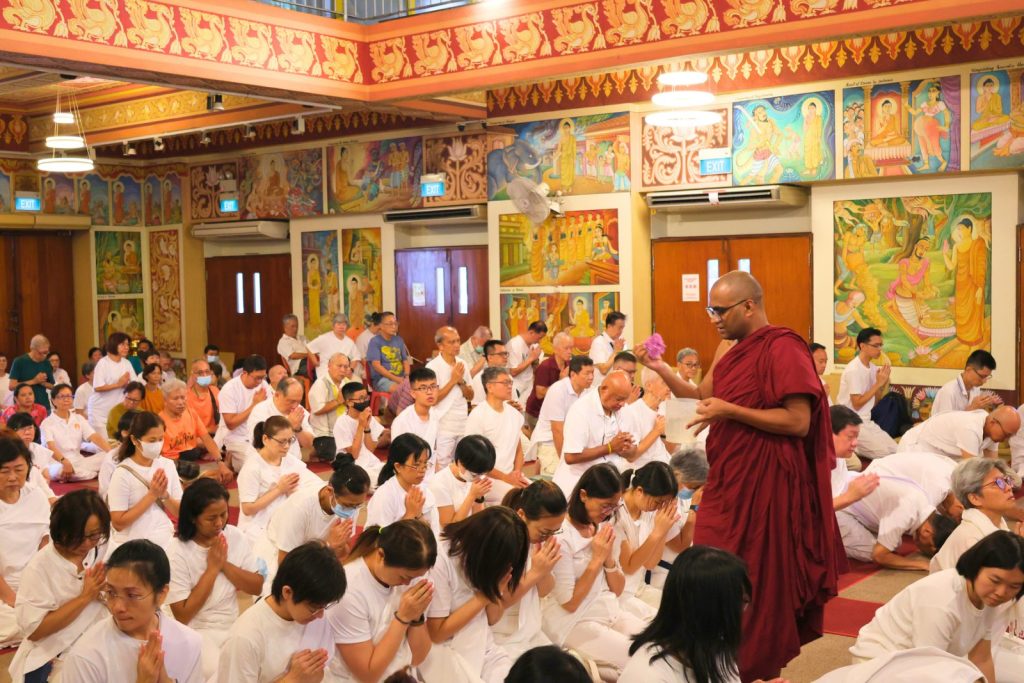
On 1 May 2026 — Labour Day, a full-moon Uposatha, and the day of the Sīla Samādāna retreat — a full house gathered in white to undertake the Eight Precepts. Here is that day, from A to Z.
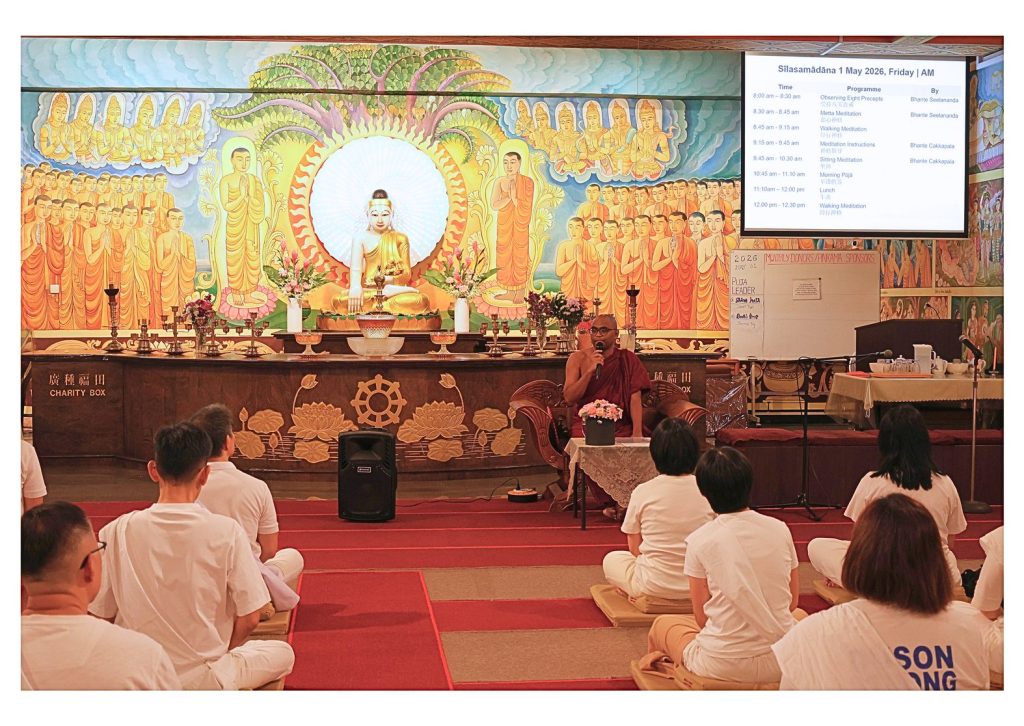
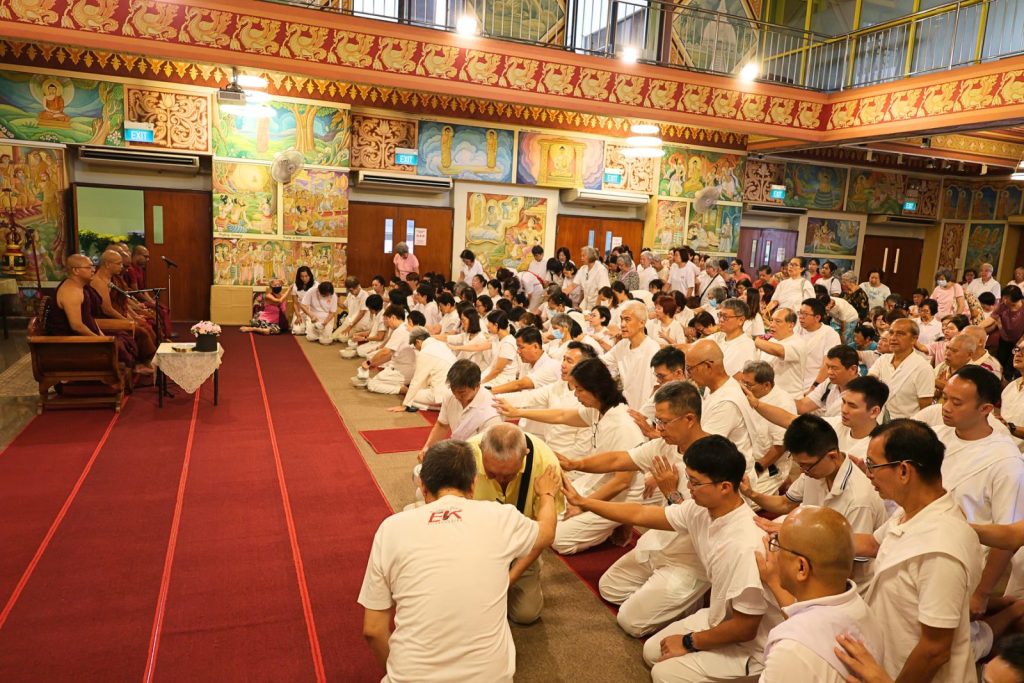
AAṭṭhaṅga Sīla — The Eight Precepts formed the ethical foundation of the retreat. The request for observance was made in unison by the practitioners to Bhante Seelananda, the Chief Resident Monk, before the programme commenced.
BBuddhānussati. After lunch, Bhante Suneetha guided practitioners in Buddhānussati — the recollection of the Buddha’s qualities through 108 rounds of the Buddha Vandanā, a practice that cultivates joy, faith and inspiration through devoted remembrance.
CCattāro Satipaṭṭhāna — the Four Foundations of Mindfulness. The whole day’s architecture — sitting, walking, eating, listening — was rooted in the Buddha’s foundational teaching: mindfulness of the body, of feelings, of the mind, and of mental objects.
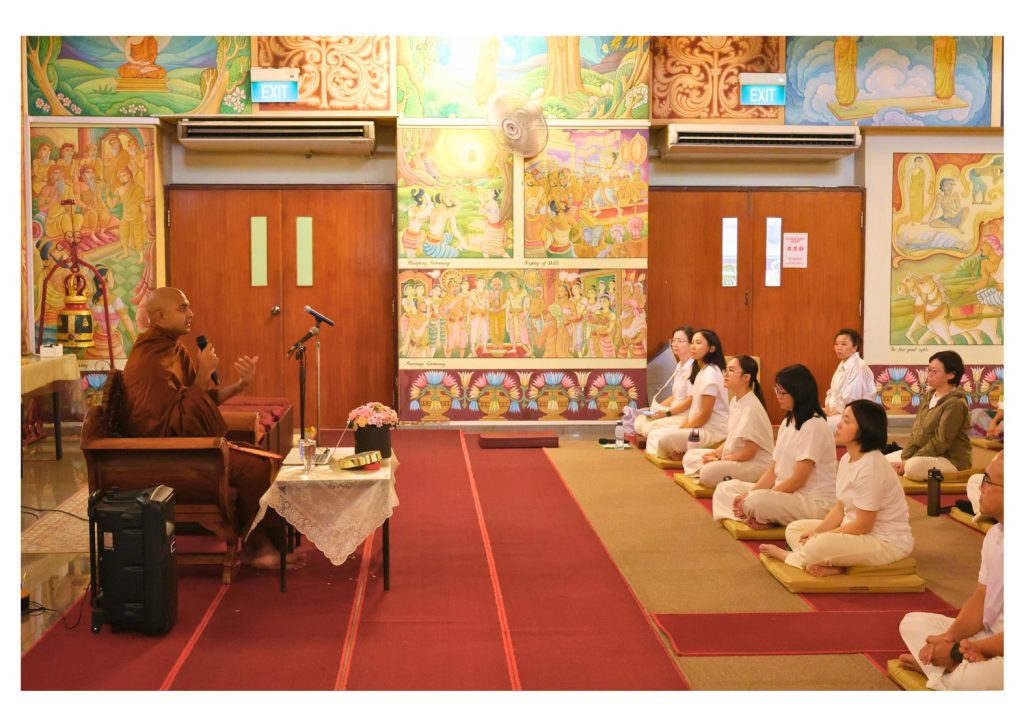
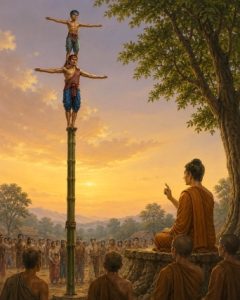
DDhamma Talk: Remembering Your Ancestral Territory. At 3.30pm, Bhante Sirisumana offered a teaching built on a single image. When a being ventures out of its natural territory, it swims against the current — exposed and vulnerable. So too the human mind, assailed through the five senses in the world outside. The temple, on this day, was that ancestral territory — a protected ground for the practice, and a map back to it when we step into the unfamiliar current of daily life.
EExtending the Practice. The retreat did not end at 6.00pm. Participants were encouraged to keep the Eight Precepts until dawn on 2 May. What began in the Shrine Hall was carried home. The temple is a training ground; life is the practice.
FFortitude. To sit through a full day of precepts, noble silence and meditation on a public holiday required more than discipline. Right effort is not the effort of gritting one’s teeth; it is the steady, renewable commitment to begin again.
GGoing for Refuge — Saraṇāgamana. Three times, in Pāli and in understanding: Buddhaṃ saraṇaṃ gacchāmi. Dhammaṃ saraṇaṃ gacchāmi. Saṅghaṃ saraṇaṃ gacchāmi. To go for refuge is not an act of escape — it is an act of orientation. The day began here.
HHappiness. Does meditation make one happy? Bhante Cakkapala answered by returning to the Pāli: Dukkha Nirodha, the cessation of suffering. Happiness, in the Buddhist sense, is not the presence of excitement but the absence of mental suffering. “As we do not follow exciting things, our mind is tranquil. No depression, no stress, no anxiety. That is the cessation of suffering.” And for those who practise deeply, there is also pīti — meditative rapture that needs no external cause.
IInstructions, Meditation. Bhante Cakkapala anchored the technical heart of the day, offering meditation instructions at 9.15am and guiding the meditation periods throughout. His teaching threaded through the retreat like a quiet current: steady, precise, patient.
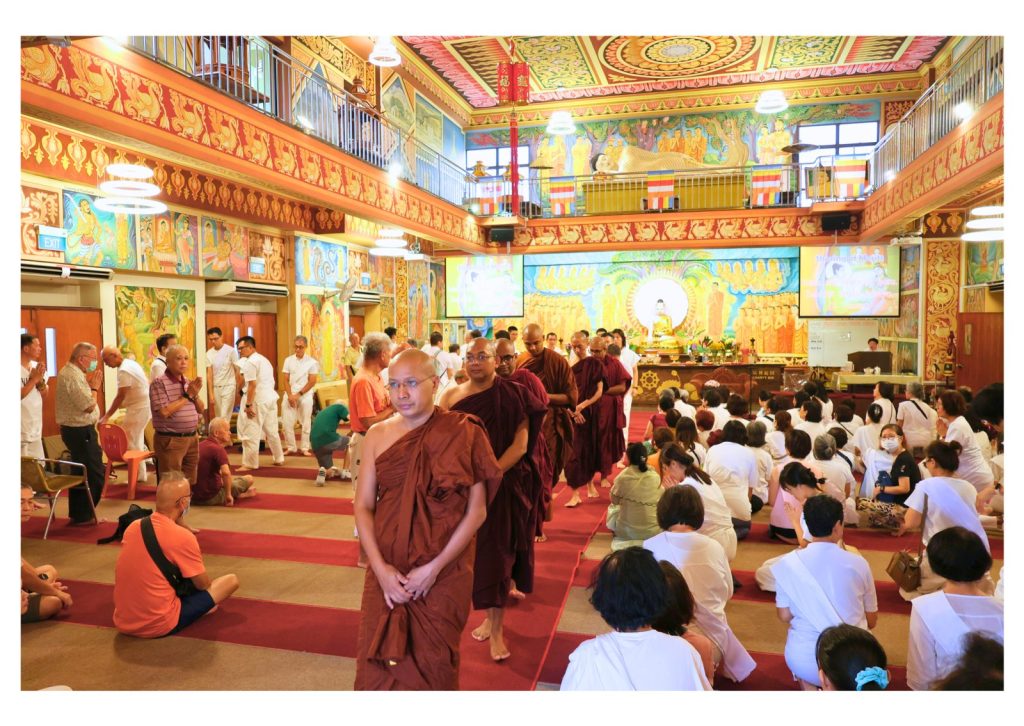
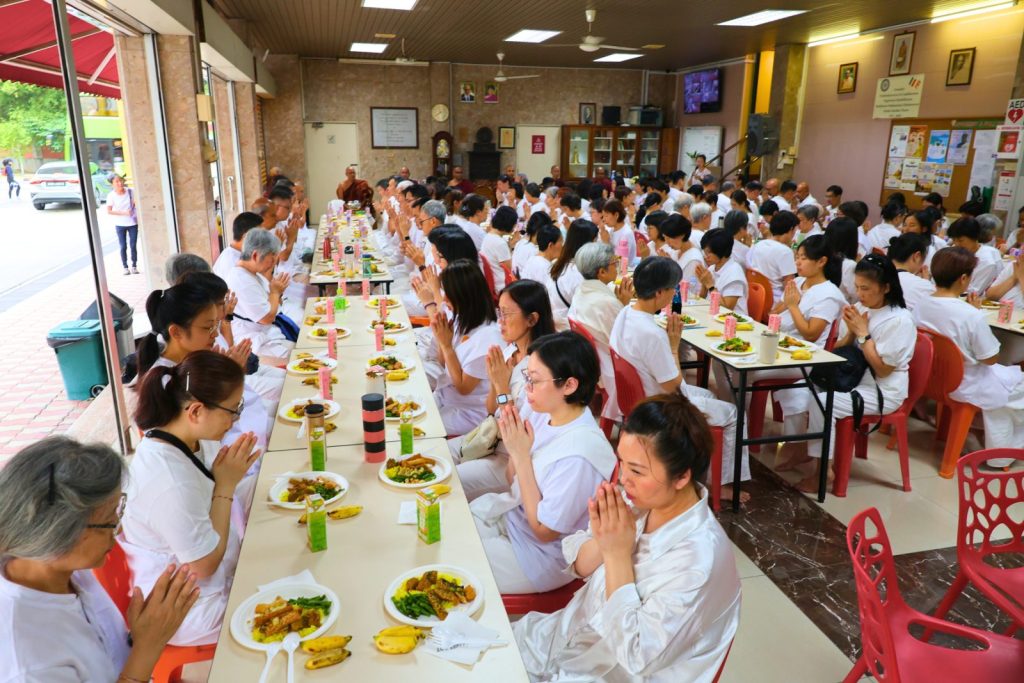
JJoining the Queue. Lunch was not a break but a continuation of the practice. Practitioners left the Shrine Hall in a two-line file, following Bhante in Noble Silence to the Mangala Hall. One plate, one serving. Every step, mindful.
KKindness — Mettā Meditation. The first meditation of the day, led by Bhante Seelananda. Having taken the precepts, the assembly turned its attention outward, radiating goodwill in every direction. Before any sitting, before any instruction: begin with kindness.
LLabour Day. The retreat fell on 1 May, a public holiday. While the world rested, this community chose a different kind of effort — not the effort of production, but the effort of cultivation. A full day, freely given, to the work that matters most.
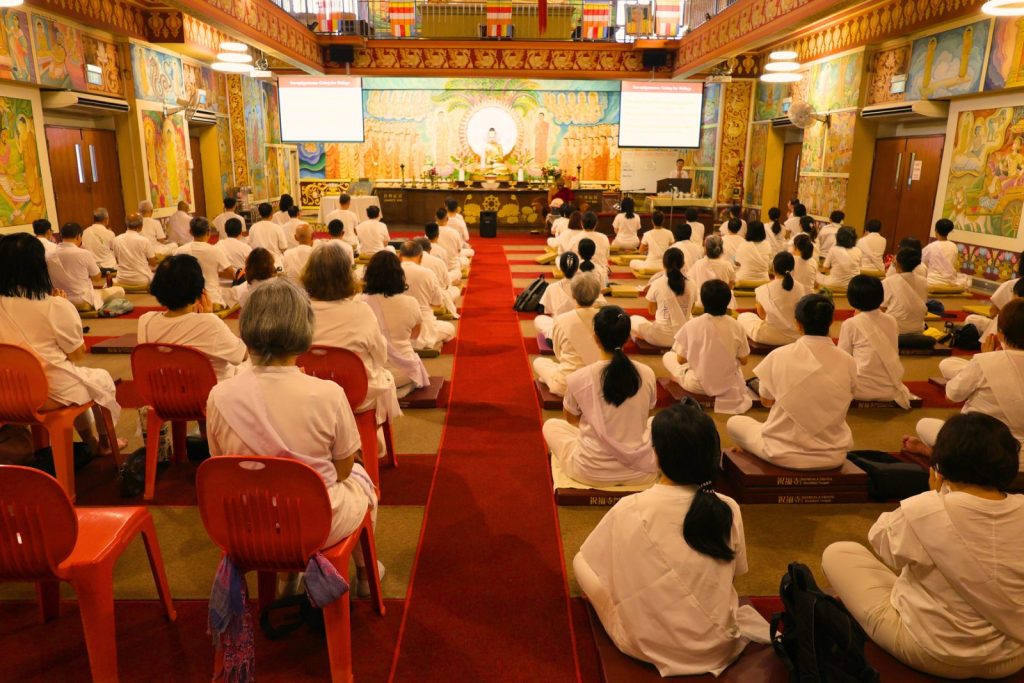
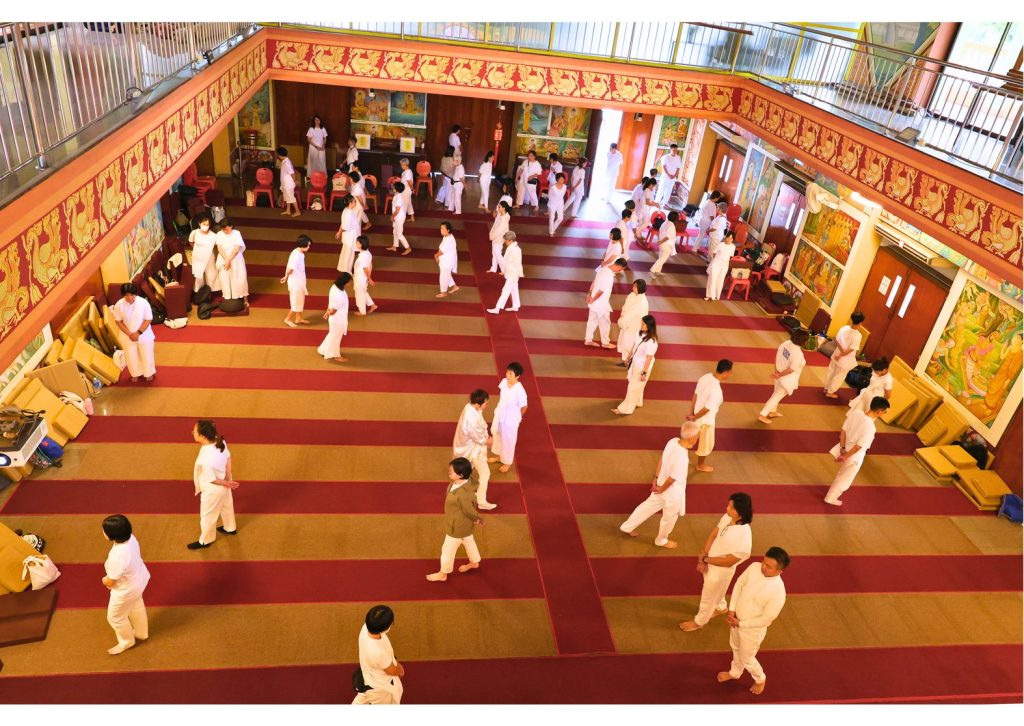
MMeditation. The rhythm of the day was built around it, and from it. Three formal sitting periods, five walking meditations woven between sessions, Buddhānussati in the afternoon, mettā at the opening. From 8.00am to 6.00pm, meditation was not a segment of the retreat — it was the retreat.
NNoble Silence. Phones on silent, idle conversation set aside. Noble Silence was the atmosphere in which the retreat breathed — not emptiness, but fullness. The absence of noise made room for something more essential.
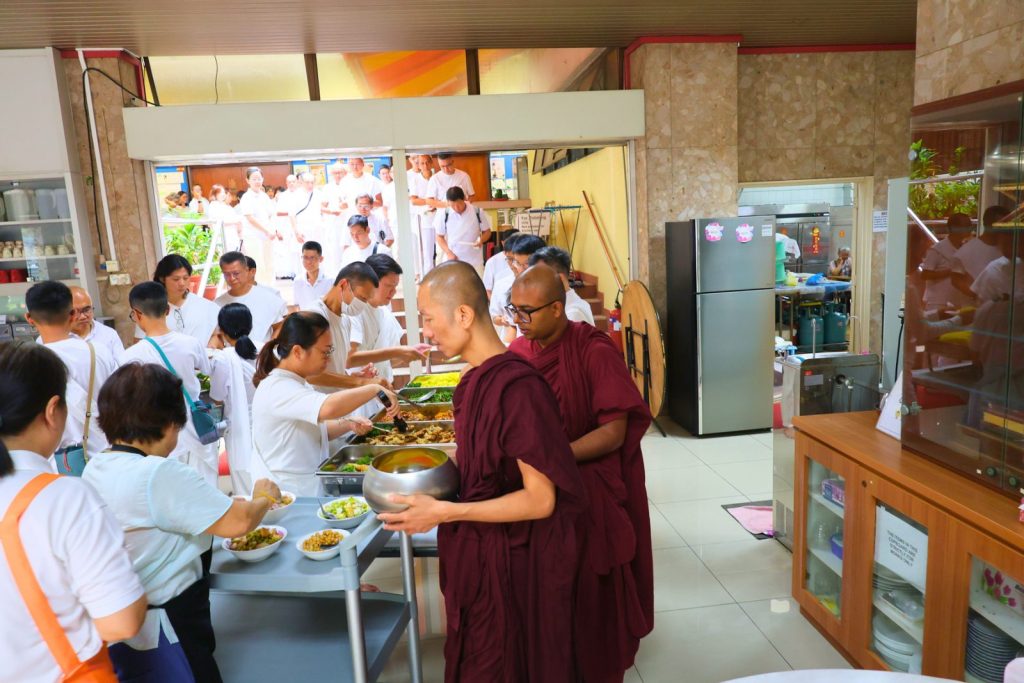
OOne Plate, One Serving. The generosity of the Dāna sponsors provided nourishing meals, served by each practitioner to the next — a reminder that every plate is made possible by a multitude of compassionate hearts.
PPañca Sīla — the Five Precepts. The closing ceremony brought practitioners home to the Five Precepts, the enduring foundation of lay Buddhist life. Having upheld the stricter Eight for a full day, part of the community recommitted to the Five as the thread to carry into every ordinary morning.
QQ&A with Bhante Cakkapala. The floor opened at 5.30pm, to questions from practitioners who had just completed the two-month meditation courses and others who had spent nine hours in practice. On sleepiness: change your meditation object, recollect the Triple Gem, wash your face, walk mindfully, look toward the light — “and if none of these work, the Buddha said, just go to sleep.” On physical pain: be patient, change posture only when necessary and always mindfully. “If your mind is truly on the breath, you do not notice the pain.”
RReflection on Almsfood. Before the first bite, practitioners were led in the reflection on almsfood — food received not for amusement or beauty, but for the sustenance of the body and the support of the spiritual life. It closed with the aspiration that gathered the whole day into one line: “May we all attain the supreme bliss of nibbāna.”
SSīlasamādāna. The name says everything: sīla, ethical conduct; samādāna, the taking up. To observe precepts is not passive — it is an active, wholehearted choosing, renewed with every breath and action.
TTransference of Merits. Before the final chant, merit was transferred — the Theravāda practice of sharing the goodness of the day with all beings everywhere, a gesture of loving-kindness that expands the retreat beyond the temple walls.
UUniqueness of Buddhist Meditation. It stands apart in two ways. First, vipassanā, the direct investigation of the true nature of mind and body. Second, the aim stated in the Satipaṭṭhāna Sutta: the removal of attachment and aversion — the clear, unflinching knowing of one’s own mind, until even anxiety, anger and fear are seen for what they are and gradually released.
VVolunteers. Behind every session that ran on time, every cushion in place, every plate collected in silence, there were volunteers. Every coordinator and helper who ensured the day flowed with grace was, in their own way, also practising.
WWhite. Every practitioner arrived in full white, shoulders covered, no adornments. The white sash across the left shoulder was a visible declaration: today, I commit to mindfulness and virtue in thought, word and deed.
XeXtraordinary Day. 1 May 2026 was no ordinary day — Labour Day, full moon, and Sīla Samādāna retreat, three auspicious threads woven into one. In the Theravāda tradition the full-moon Uposatha is the most sacred day of the lunar calendar.
YYācāmi — the Request. The retreat’s first spoken words were a request from the practitioners to Bhante Seelananda: Ahaṃ bhante… yācāmi, “I respectfully request.” Three times. The traditional asking thrice signals not repetition but sincerity.
ZZealous Guarding. The closing benediction, following the conferring of the Eight Precepts: “May you diligently prosper the well-guarding of the Eight Precepts together with the Three Refuges.” Guard well what you have received. Carry it with diligence.
From the first request to the final chant — twenty-six moments, one unbroken thread of practice. May all be well and happy.